FUTURSONANZ
AI Labs by Lukas Schreck

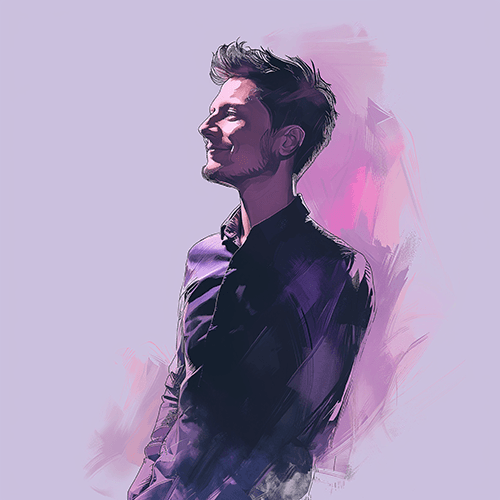
Lukas Roman Schreck
AI Consultant at a German technology company. Working at the intersection of artificial intelligence, integral theory, and futures research for years.
"Futures don't just happen — they reveal themselves in our actions and become readable through news. Futursonanz is my research lab: An AI-powered system that decodes thousands of news items daily through scientific frameworks and condenses them into constellations — transparent, source-linked, and without bias embellishment."
AI Radar
AI & society through the integral lens
Six fields span the radar: agentic AI, governance, foundation models, society, science, and consciousness and cognition. Daily media signals are assigned semantically to the field they fit best, and are also classified by AQAL quadrant, level of the Multi-Level Perspective and Spiral Dynamics profile.
Each node is a field, each dot a signal. Shown are the 40 signals with the highest similarity to their field.
AI & Society — Integral
Explore radarEDG
The Next 100 Years — 22 goals for a century
Futurist Pavel Luksha describes 22 Evolutionary Development Goals: steps in economy, governance, culture and consciousness that lie ahead until 2100. Futursonanz maps daily media signals onto these goals and shows where something is moving right now.
Each node is a goal, its colour the stream it belongs to; the small dots are signals from recent days that semantically match a goal.
Evolutionary Development Goals — Live
Explore the EDGsSignal Hub
What becomes readable today
The public feed of decoded media signals: news, trade publications and preprints, classified by AI by domain and potential. Filterable by eight domains, by constructive solutions and by radar.
Shown is an excerpt of the latest high-potential signals. In the feed, every signal links to its source.
Signal Hub — latest signals
Open the feedUrbanify
Imagine Achern is Berlin — what would we discover?
In Berlin, an hour of travel is normal — for a concert, an exhibition, a children's theatre. From Achern, that same hour reaches Freiburg, Karlsruhe and Strasbourg. The map measures it over the real road network and shows what is on within that range.
Three zones: 15, 30 and 60 minutes by car from Achern. Dashed: the state of Berlin at the same scale, with Alexanderplatz placed on Achern. Map data © OpenStreetMap contributors.
Urbanify — the hour around Achern
Entangled Libraries
Retrieval from your own shelves, not world knowledge about books
Ask a language model about a book and it answers with statistical world knowledge: plausible, but without evidence. Entangled Libraries searches the indexed holdings of a library instead — blurbs, tables of contents, transcribed passages, personal notes — and the librarian answers only from what is there. On top sits a curation layer: the people who live with the library review, add and arrange, and every passage carries its origin — book text, their own words, or model text.
Schematic example query, no holdings data: every hit comes from the holdings and carries its origin. The bars stand for text this page does not show — the libraries themselves are private.
What does this library say about attention?
Hits in the holdings
- Book textTranscribed passage
- Own wordsNote on the book
- Model textProfile without book text
Entangled Libraries — example query, schematic
Open the libraryBinary Brain
A long-term memory that does not belong to the provider
Claude, GPT and Gemini all remember things — each on its own, and when you switch, the memory stays behind. Binary Brain is an MCP server that keeps memories in a database of your own: locally in SQLite or in Postgres with vector search, reachable from any MCP-capable client. Nine tools ingest, search, condense and dissolve; ten categories record what an entry is — a decision, an observation, a pattern or a goal.
Example report from the README: in the Postgres setup a nightly pipeline links similar memories, checks the holdings, summarises patterns and lets unused entries fade. The MCP server is open source under the MIT licence.
Brain Dreaming — nightly report
04:30 · took 42 s · successful
Weave
500 links between similar memories
500 newly stored
Health
171 memories, 6 checks
398 of 495 tags occur only once
Emerge
2 dense clusters, 2 new patterns
"Integrale KI-Perspektiven" · 8 memories
Fade
0 faded, 0 expired
Binary Brain — nightly report (example)
Code on GitHub